


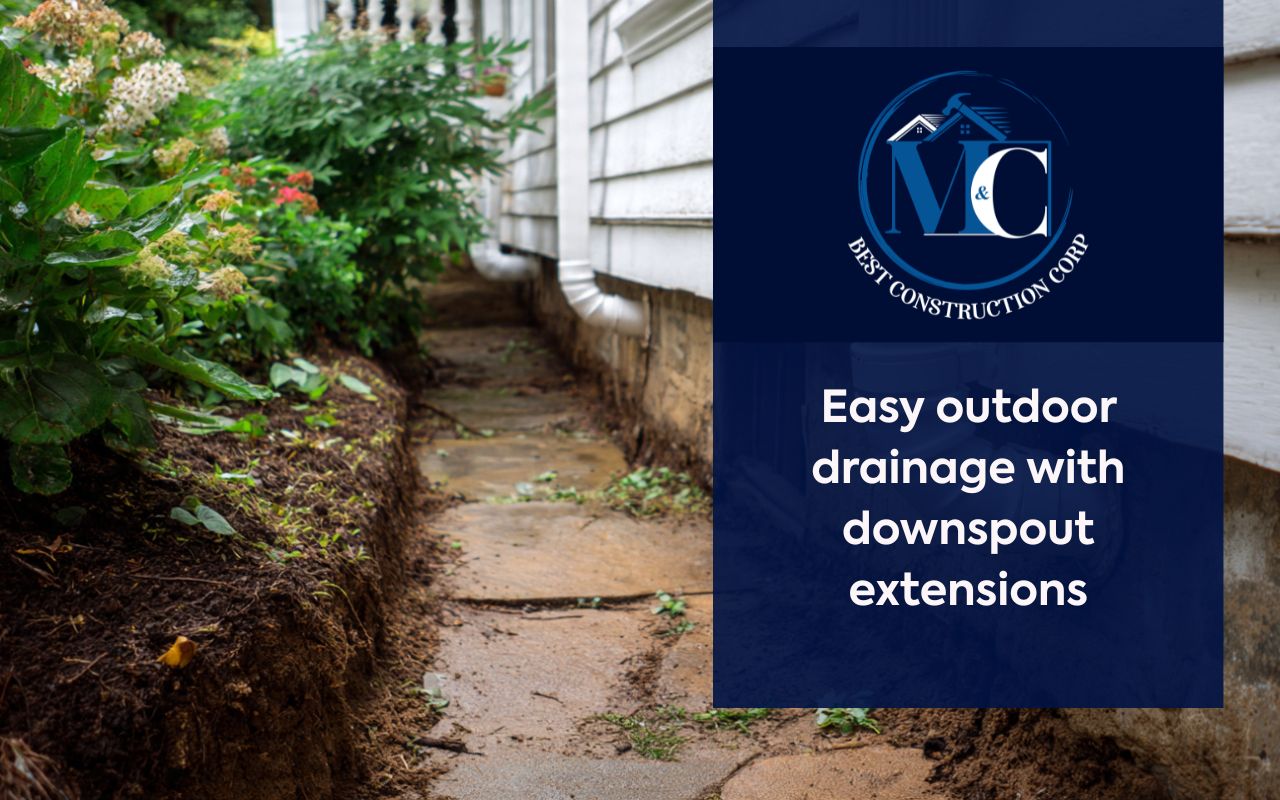
Easy outdoor drainage with downspout extensions
Tired of dealing with water pooling around your house every time it rains? You’re not alone. Many homeowners in White Plains, NY, face poor outdoor drainage. That issue can lead to basement flooding or foundation damage. However, there’s a simple fix: downspout extensions for drainage.
These add-ons move gutter water away from your home. As a result, you gain peace of mind during heavy storms. With the best downspout extension length and the right setup, you can prevent costly repairs. In this post, MC Best Construction Corp shares simple tips for a smooth install.
Why proper outdoor drainage matters for your home
Good drainage helps protect your property from water damage. When rainwater sits near the foundation, it can seep into basements and weaken concrete. Over time, cracks can appear. Therefore, learning how to redirect gutter water away from house foundations is a smart first step.
Also, drainage protects landscaping and outdoor areas. Excess water can wash away mulch and harm plant roots. In White Plains, NY, heavy rainfall is common. So, MC Best Construction Corp often recommends downspout extensions for drainage to guide runoff to safer areas.
Reduces the risk of basement moisture
Helps protect foundations from long-term wear
Keeps lawns, patios, and beds from staying soggy
Supports better curb appeal over time
What downspout extensions are and how they help
Downspout extensions connect to your gutter downspouts and carry water farther from your home. As a result, water is less likely to pool near the foundation. They come in different shapes and materials, so it’s easier to match your yard and needs.
MC Best Construction Corp often sees homeowners choose flexible or rigid options. Flexible styles bend around obstacles, while rigid ones look more permanent. Either way, they support downspout extensions for drainage by moving water to a safer spot.
Key features to look for
When you compare options, focus on practical details. For example, check durability, the connection type, and how easy it is to clean. Also, consider where the water will end up after it exits.
Material that holds up in storms and snowmelt
Secure fit at the downspout outlet
Easy removal for quick cleaning
End shape that spreads water safely
How to choose the best extension length
Picking the best downspout extension length is vital for water control. If it’s too short, water may still sit near the foundation. If it’s too long, it can look awkward and become a tripping risk. So, aim for a balanced reach that fits your yard.
Start by checking the slope around your home. If the ground drops away, a shorter reach can work. However, if the yard is flat, a longer reach helps more. In many cases, MC Best Construction Corp suggests placing the discharge several feet away from the foundation.
Measure from the downspout to a safe discharge point
Check if the yard slopes away or toward the home
Avoid placing the end near walkways or steps
Test with a hose before final placement
Popular types of downspout extensions
There are several styles, and each can work well. Still, the best choice depends on your yard layout and how you want it to look. MC Best Construction Corp often helps homeowners pick an option that fits their drainage goals.
Rigid PVC extensions
Rigid PVC options look neat and hold their shape. They can be painted to match trim, which helps them blend in. Also, water moves quickly through their smooth interior, which can reduce buildup.
Flexible corrugated extensions
Flexible corrugated options bend easily, so they can route water around shrubs or pavers. However, their ridges can hold debris. Therefore, quick checks help keep them working well.
Trench-style drainage add-ons
Some homeowners pair extensions with gravel trenches for a more lasting setup. Water moves into the gravel and spreads out slowly. Although this takes more work, it can reduce surface pooling.
Splash blocks and simple diverters
Splash blocks sit under the outlet to reduce splashback. They work best for short moves. Still, they can pair well with downspout extensions for drainage when you want an extra layer of protection.
Installation tips for White Plains, NY homes
Downspout extension installation for White Plains NY homes can be simple with the right steps. First, clean the gutters and downspouts. That way, water can flow freely. Next, measure the distance to the discharge point and cut the extension as needed.
Then, attach the extension securely with screws or fasteners. Also, seal joints if needed to reduce leaks. Finally, test the system with a garden hose. MC Best Construction Corp recommends checking that water moves away smoothly and does not flow back toward the house.
Clean the gutter path before you begin
Measure and cut for a snug fit
Attach and secure the extension to prevent slipping
Test flow and adjust angles as needed
When you need extra turning power
If you’re learning how to redirect gutter water away from house corners, elbows can help. They guide the extension around steps, beds, or edges. Also, stakes or brackets can keep the extension in place during storms.
Maintenance steps that keep drainage working
Regular checks keep your system reliable. In spring and fall, look for leaves, dirt, and buildup. If you spot a clog, remove it right away. As a result, you protect the gutters from extra stress.
Flushing with a hose often clears small blockages. Also, watch for leaks at joints and tighten connections if needed. During winter, check for ice that blocks flow. If a part cracks, replace it quickly to keep downspout extensions for drainage effective.
Frequently Asked Questions
How far should a downspout extension move water from the house?
In most cases, moving water several feet away helps a lot. However, yard slope matters. MC Best Construction Corp suggests testing flow to confirm the discharge point stays dry near the foundation.
What is the best downspout extension length for a flat yard?
Flat yards often need a longer reach than sloped yards. Therefore, use a longer option or an adjustable piece. Also, confirm water does not travel back toward low spots.
How can I redirect gutter water away from house corners safely?
Use elbows or angled fittings to guide water around corners. Also, anchor the extension with stakes. That way, it stays aligned during heavy rain.
Is downspout extension installation for White Plains NY different because of weather?
Yes, it can be. White Plains sees heavy rain and winter freeze cycles. So, secure connections well and check for ice buildup during colder months.
Do flexible extensions clog more than rigid ones?
They can, because the ridges catch debris. However, simple rinsing and seasonal checks often prevent problems. If clogging is frequent, rigid options may be easier to maintain.
Next steps to protect your home’s drainage
When water control is done well, you protect your foundation and your outdoor spaces. So, start with simple improvements and keep up with quick seasonal checks. If you want help choosing a setup, explore MC Best Construction Corp support options through the MC Best Construction Corp services page.
Also, if your gutters need attention first, review this guide on how to fix gutters. When you’re ready for tailored guidance, reach out through the MC Best Construction Corp contact page.
