


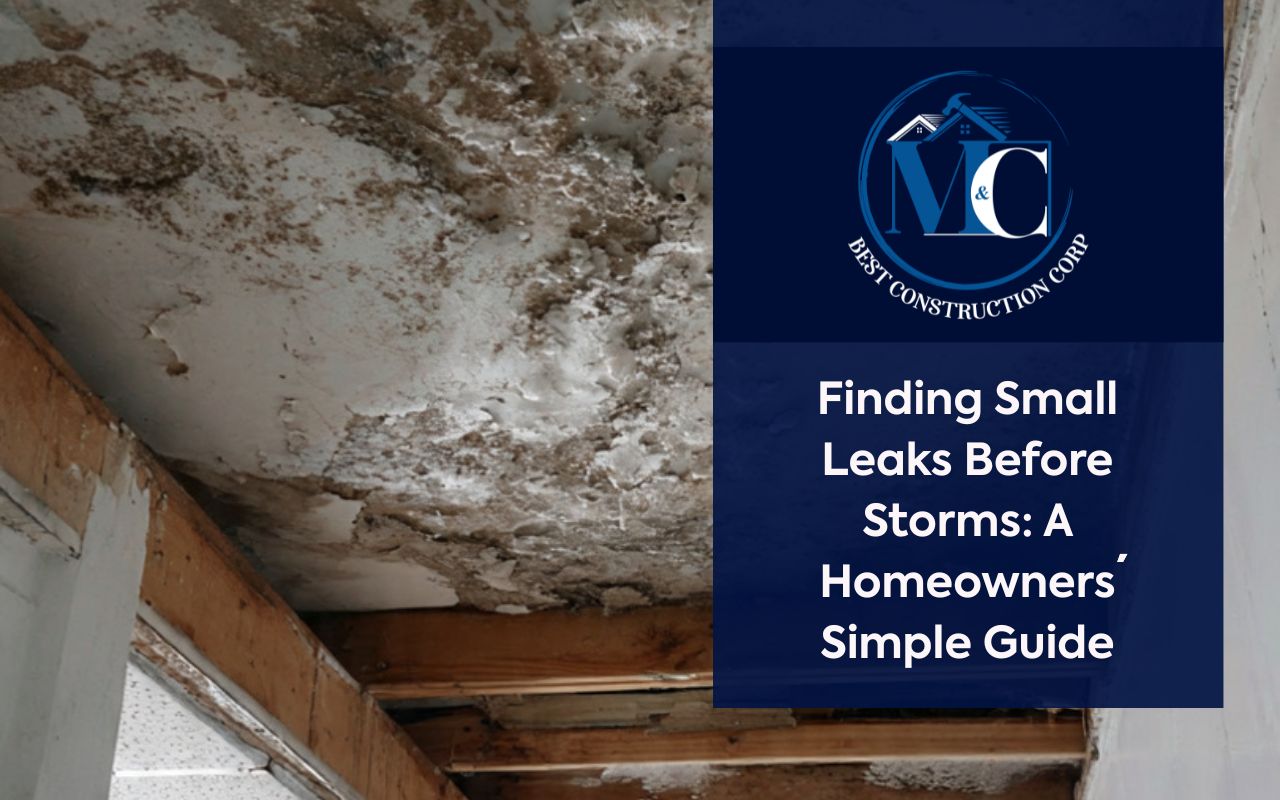
Finding Small Leaks Before Storms: A Homeowner’s Simple Guide
Spotting Small Leaks Before Storms starts with subtle clues like a minor ceiling stain or a faint musty smell after heavy rain. These signs can seem small, yet they may point to a bigger issue above your ceiling. Therefore, a little attention now can prevent bigger repairs later.
Also, check areas people often miss, such as around skylights and chimneys. If you notice a damp spot on your walls after snow, take it seriously. In Nanuet, NY, acting early protects your home and your peace of mind.
Common Signs of Small Leaks
Spotting Small Leaks Before Storms often begins indoors, where water leaves early traces. Even small changes can grow over time, so it helps to act fast. In addition, trust your senses, because odors and stains can appear before drips.
Minor ceiling stains that slowly spread
Damp spots on walls that stay cool or dark
A musty smell after snow or rain
Soft drywall, peeling paint, or bubbling texture
Faint drip sounds near vents, pipes, or exterior walls
Why Early Detection Helps
Small leaks can worsen with each storm, so early action saves money and stress. As water lingers, it can weaken wood and insulation, and it may affect wiring. Meanwhile, moisture can lead to mold, which can reduce indoor comfort. For more context, review roof rain damage warning signs.
Check Around Skylights and Chimneys
Checking around skylights and chimneys is essential, because seals and flashing can wear down. Even tiny gaps can invite wind-driven rain or melting snow. Spotting Small Leaks Before Storms is easier when you check these areas before the next weather shift.
Look for cracked sealant around skylight frames.
Inspect flashing for rust, lifting, or bent edges.
Check nearby shingles for cracks or missing pieces.
Scan the attic area below for damp insulation.
Tools That Help You Find Leaks
You can start with a flashlight and a steady ladder, especially when checking the attic and roofline. A moisture meter can help find hidden dampness behind surfaces. Also, a careful hose test can reveal a slow drip. For cold-season guidance, use these winter roof repair tips.
DIY vs. Professional Inspection
Some checks are safe for homeowners, such as looking for attic stains and clearing debris from gutters. However, steep roofs and hidden damage can be risky to assess alone. If you suspect ongoing moisture, consider roof leak repair in Nanuet, NY through roofing services in Rockland County. Spotting Small Leaks Before Storms is faster with trained eyes.
Preventive Maintenance Tips
Routine care reduces surprise leaks, especially before heavy rain or snow. Spotting Small Leaks Before Storms becomes a habit when you follow a simple seasonal routine. As a result, your roof drains better and stays drier inside.
Clean gutters and downspouts twice a year.
Trim branches to reduce debris and shingle wear.
Seal roof openings around vents, pipes, and skylights.
Check attic airflow to limit moisture buildup.
Frequently Asked Questions
What causes small roof leaks to start?
Often, they begin with worn flashing, cracked shingles, or sealant that has dried out. In addition, wind-driven rain can push water into tiny gaps.
Are ceiling stains always a roof issue?
Not always, because plumbing or condensation can also cause stains. However, stains near the roofline often point to roof moisture.
How can I tell if a wall spot is from outside moisture?
Track it after rain or snowmelt. If it returns with weather changes, outside water entry is more likely.
Is a musty odor a serious warning sign?
Yes, because it can indicate damp insulation, wet wood, or early mold growth. Therefore, it is worth checking quickly.
When should I call a roofer?
Call when moisture keeps returning, the leak source is unclear, or the roof is unsafe to access. Also, call if you see multiple stains.
Protecting Your Home From Water Damage
Spotting Small Leaks Before Storms helps you protect your home before the next downpour. When you notice stains, odors, or damp patches, act early and document the changes. If you want a professional review, reach out through schedule a roof inspection or visit the contact page.
