


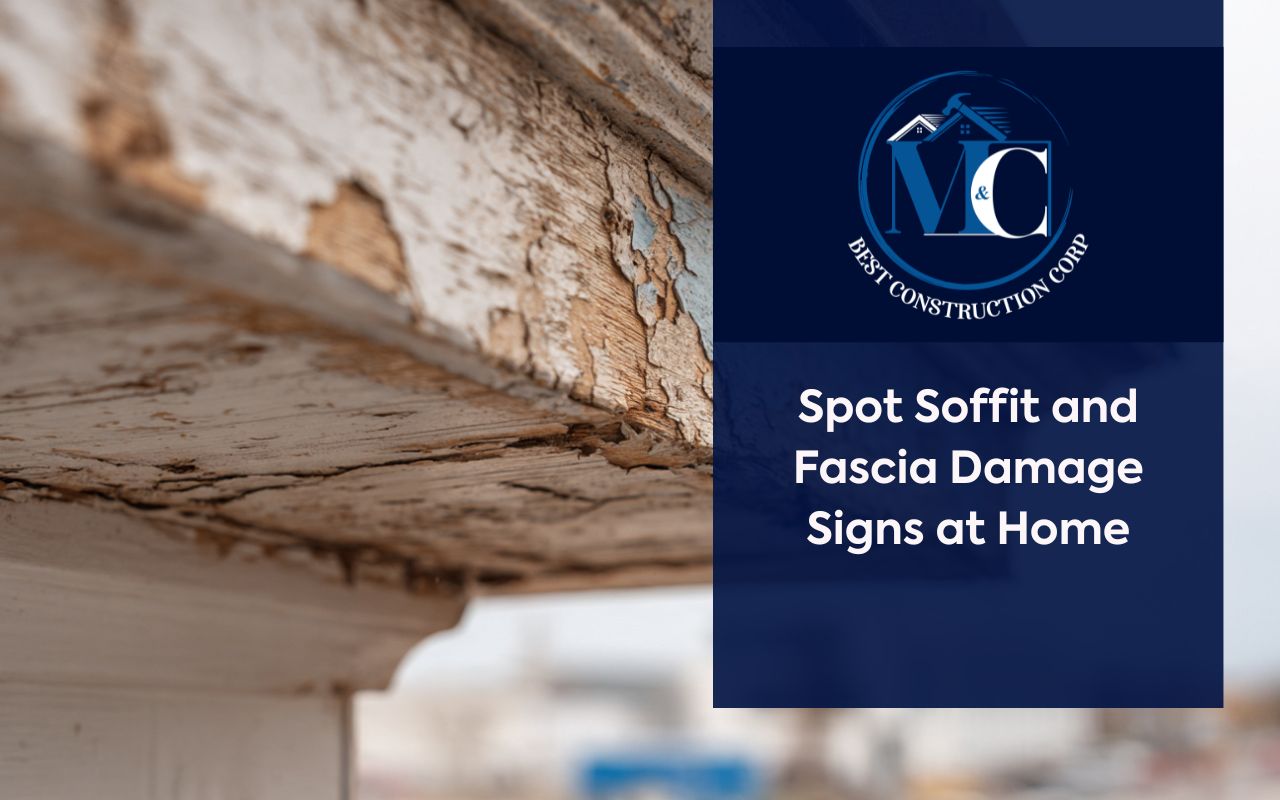
Spot Soffit and Fascia Damage Signs at Home
Identify Soffit and Fascia Damage Signs in Your Home Effortlessly. Recognize subtle warnings your exterior may be sending you. Have you noticed bubbling paint on the roof edge or water stains on ceilings? These can be early indicators of soffit and fascia damage signs that, if ignored, may lead to costly repairs and bigger issues.
This guide helps you spot problems early and protect your home’s structure. Many homeowners in New City, NY, and beyond miss what causes fascia board rot or the signs of soffit vent problems until it’s late. With MC Best Construction Corp guidance, you can act sooner and make repairs feel simpler.
Why Soffit and Fascia Matter for Your Home
With MC Best Construction Corp, keeping your exterior healthy goes beyond clean siding. Soffit and fascia protect the roof edge and help your gutter system work well. Fascia boards run along the roof’s lower edge and hold gutters. Soffits sit under the overhang and help your attic breathe.
When these parts weaken, soffit and fascia damage signs may appear fast. Together, they help block water, pests, and rot. Plus, good airflow through soffit vents helps reduce attic heat and moisture. If you want a clear view of exterior options, explore roofing and exterior services that match your home’s needs.
Common Causes That Lead to Damage
Over time, several issues can weaken soffit and fascia. Moisture is a common driver, especially when clogged gutters push water back toward the wood. In colder seasons, freeze-thaw cycles can widen small cracks. As a result, paint may blister and boards may split.
Clogged gutters that let water overflow onto fascia
Repeated freeze-thaw cycles that open cracks
Cheap materials or rushed installation that speeds wear
Pests nesting under loose edges and chewing materials
These problems often explain what causes fascia board rot. Also, blocked airflow can trap moisture and speed decay, so early checks matter.
Exterior Soffit and Fascia Damage Signs You Can See
Start with a simple visual check around the eaves. Look for peeling or blistering paint along the roofline. Warped, sagging, or wavy boards can point to hidden moisture. Gaps where pieces meet may suggest loose fasteners or shifting wood.
Peeling, bubbling, or cracked paint near the roof edge
Sagging soffit panels or bowed fascia boards
Gaps at corners, joints, or around gutters
Dark streaks on siding from overflowing gutters
Mold or mildew under shaded eaves
If storms recently hit your area, it also helps to compare symptoms with common roof issues. Read roof rain damage warning signs to connect gutter overflow, leaks, and edge rot more quickly.
Interior Clues That Point to Edge Problems
Some issues show up inside before you notice them outside. Ceiling stains can suggest water moving past the roof edge. Damp attic insulation can signal poor airflow. Over time, trapped moisture can encourage mold and soften framing.
Yellow or brown ceiling stains near exterior walls
Musty odors, high humidity, or damp insulation in the attic
Small drips after rain, especially near the eaves
Rusty nails or dark marks on nearby wood framing
These may connect to signs of soffit vent problems, especially if vents are blocked by debris or nests.
DIY Checks You Can Do Safely
With MC Best Construction Corp best practices in mind, use a sturdy ladder, gloves, a flashlight, and a phone camera. First, look up from the ground and scan for gaps and sagging. Next, shine light along soffit vents to spot clogs. Then, feel the fascia for soft spots while staying stable and cautious.
Also, take photos of any damage. This helps you compare changes over time and makes it easier to describe issues if you call for help. If paint bubbles near the edge, gently probe with a screwdriver to see if the wood is firm or soft.
When to Call a Pro for an Evaluation
If you see widespread rot, major sagging, or recurring stains, a professional check is a smart next step. A qualified contractor can inspect hidden areas, test soft wood, and review vent airflow. They often catch subtle soffit and fascia damage signs that are easy to miss from the ground.
For homeowners seeking soffit fascia repair for New City NY, working with a local team can help because they understand seasonal weather patterns and local building rules. If you want to discuss your specific case, use the contact MC Best Construction Corp page to share photos and details.
Frequently Asked Questions
What are the earliest soffit and fascia damage signs?
Early warnings include bubbling paint, small gaps at joints, and mild sagging under the eaves. These can grow quickly if moisture continues.
What causes fascia board rot most often?
Overflowing gutters and trapped moisture are common causes. Water sits against the fascia, then seeps into wood and starts decay.
What are signs of soffit vent problems I can notice?
Musty attic odors, damp insulation, and higher attic humidity are common clues. Outside, vents may look blocked by dirt or nests.
Can I fix minor damage without replacing everything?
Sometimes, yes. Small sections can be repaired, sealed, and painted if the surrounding wood is still solid and dry.
When should I consider soffit fascia repair for New City NY homes?
If you see repeating leaks, soft wood, or sagging panels, repair is often urgent. Local weather can speed damage, so quick action helps.
What to Do When You Find Damage
Once you confirm trouble, start by removing debris from gutters and clearing soffit vents. Then, let wet areas dry. If wood is rotten, remove only the damaged sections to protect nearby materials. After that, replace boards with durable options and seal edges to block moisture.
Clean gutters and downspouts to stop overflow
Clear vents to restore airflow and reduce humidity
Replace soft or crumbling sections before rot spreads
Seal seams and repaint with exterior-grade products
This approach reduces the chance that soffit and fascia damage signs return soon after repairs.
Prevention Tips That Keep Problems Away
Regular care helps you avoid expensive repairs. Clean gutters twice a year, or more if trees overhang your roof. Trim branches to cut debris and discourage pests. Also, check vents annually so attic air can move as designed.
Repaint exposed wood as needed and consider a wood preservative for extra protection. When you stay consistent, you reduce moisture risks and slow the cycle that leads to rot.
Protect Your Home’s Exterior with Early Action
Watching for soffit and fascia damage signs helps keep your home dry, safe, and efficient. When you understand the causes and spot symptoms early, you can prevent small issues from turning into major structural repairs. With MC Best Construction Corp support, you can choose the right next step, whether that is a quick fix or a full repair plan.
