


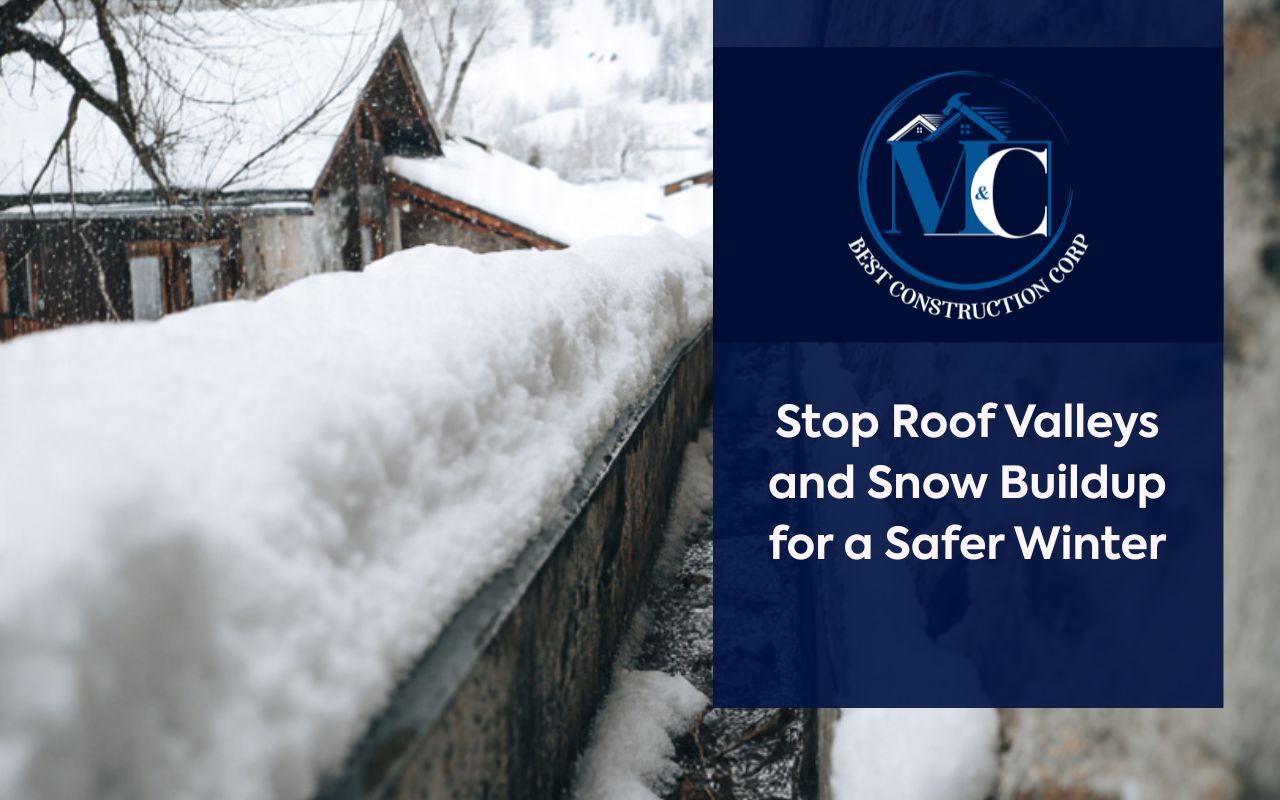
Stop Roof Valleys and Snow Buildup for a Safer Winter
Roof Valleys and Snow Buildup can quietly hurt your roof during winter. However, many people notice only after leaks start. In Nanuet, NY, snow can hide in valleys and hold debris. As a result, ice can form in low spots and add pressure.
Meanwhile, when snow and ice stay in place, roof joints face more leak risk. Therefore, simple prevention matters. This guide shares clear steps to keep water moving and your home protected all season.
Importance of Roof Valley Maintenance
Regular checks help limit Roof Valleys and Snow Buildup and protect shingles. Valleys guide rain and meltwater away where roof sections meet. However, when snow piles up, water can back up. As a result, moisture may slip under shingles and cause leaks, mold, and ceiling stains.
In colder areas like Nanuet, NY, this care matters even more. Therefore, clearing valleys early and using the right protection can reduce surprise repairs and keep spring cleanup easier.
Understanding the Risks of Snow Buildup on Your Roof
Roof Valleys and Snow Buildup often worsens because valleys sit lower than nearby shingles. As snow slides from steeper areas, it gathers in these low channels. Over time, added weight can stress roofing materials and the wood below.
Also, when melting snow refreezes at night, ice can block drainage. As a result, water may push under shingles and increase rot risk. Therefore, knowing these patterns helps you decide when to act.
Signs of Damage Caused by Roof Valleys and Snow Buildup
After heavy snow, watch for attic moisture, small drips, or dark ceiling spots. These clues can mean valleys are blocked. Also, ice lines near roof edges may show repeated melt-and-freeze cycles that wear down the surface.
Meanwhile, creaking sounds can signal extra load in low areas. Therefore, if paint peels near roof joints, address it early before minor issues grow into major fixes.
Clearing Snow Safely from Roof Valleys
Start with a plastic roof rake so you can work from the ground. Move slowly, and clear from the edge toward the valley. However, avoid shifting heavy snow onto weaker areas. Also, leave a thin layer to help protect shingles from scratches.
Use a long-handle plastic roof rake, not metal tools.
Clear in small passes to reduce sudden weight shifts.
Focus on valleys first so water can drain freely.
For more context on winter impacts, read roof snow damage and prevention.
Preventing Ice Dams in Roof Valleys
Keep attic areas well insulated and ventilated so the roof stays evenly cold. Otherwise, warm spots melt snow, and then water refreezes at colder edges. As a result, ice dams can block flow and push water into roof intersections.
Seal attic gaps near vents, pipes, and chimneys.
Improve ventilation so cold air moves under the roof.
Use safe ice melt products where needed, with care.
Effective Debris Removal Techniques for Roof Valleys
Check valleys in spring and fall for leaves and sticks that later get buried by snow. Otherwise, debris can hold moisture and invite rot where roof lines meet. Use a soft brush or blower to clear buildup without lifting shingles.
Also, inspect flashing and sealant for cracks caused by storms. Therefore, replacing worn caulk and securing flashing can keep water moving in the right direction.
Insulating Your Roof to Minimize Snow Buildup
Add quality attic insulation to reduce heat loss through the roof. As a result, snow melts more evenly and refreezes less often in valleys. Balanced ventilation also helps keep roof temperatures steady from peak to edge.
In addition, stable roof temperatures can lower stress on shingles and reduce winter leak surprises. Therefore, insulation and airflow work best as a team.
Professional Inspection and Maintenance Services
Before winter, a local roofer can spot loose shingles, worn flashing, and small gaps you may miss. As a result, quick repairs can prevent bigger leaks during storms. Scheduling routine maintenance every couple of years also helps keep valleys clean and protected.
If you want a full seasonal check, explore roofing inspection and repair services. Also, if winter issues appear fast, see winter roof repair guidance.
DIY Tips for Winter Roof Maintenance
Do a quick safety check before using a ladder. Work on calm days, wear non-slip boots, and keep tools close. Also, clear small amounts often, so the job stays manageable. As a result, valleys are less likely to trap water.
Use a stable ladder setup and have a spotter when possible.
Remove light snow early, before it packs into ice.
Spray thin ice with a water and rubbing alcohol mix to loosen it.
Frequently Asked Questions
Why do roof valleys collect more snow?
Valleys sit lower than surrounding roof areas. Therefore, sliding snow often settles there and packs down over time.
What problems can ice in valleys cause?
Ice can block drainage and trap meltwater. As a result, water may move under shingles and increase leak risk.
How can I remove snow without damaging shingles?
Use a plastic roof rake and work in small passes. Also, leave a thin layer so you avoid scraping the surface.
When should I call a professional?
If you see ceiling stains, attic moisture, or repeated ice buildup, get help. Also, call if safe access is difficult.
How do I schedule an inspection in Nanuet, NY?
You can request an inspection through the roof inspection contact page. Therefore, you can plan repairs before the next storm.
Ensuring a Safe and Sound Roof Throughout Winter
Consistent care reduces Roof Valleys and Snow Buildup and lowers the chance of hidden leaks. Moreover, routine checks, safe snow clearing, and better insulation help prevent ice blocks in low spots. Therefore, with the right steps and timely support, your roof can stay strong through winter.
