


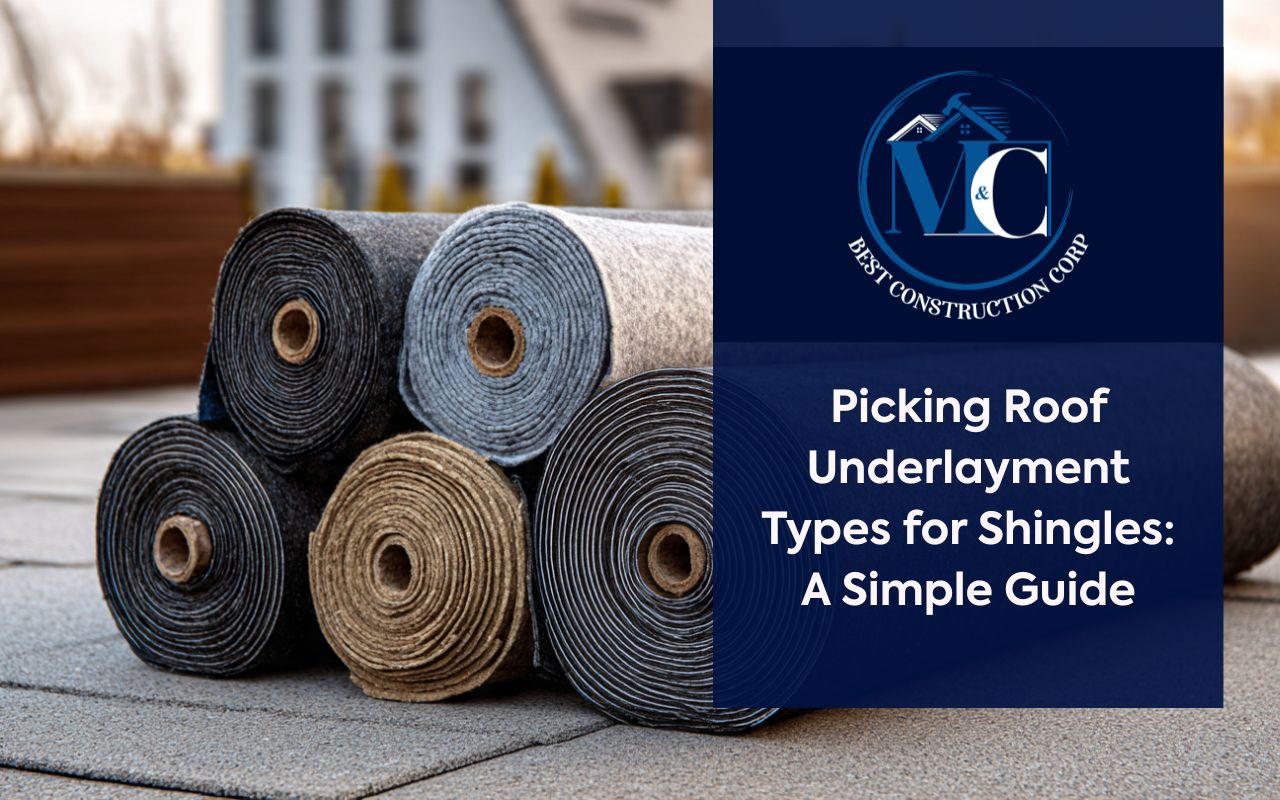
Picking Roof Underlayment Types for Shingles: A Simple Guide
Roof underlayment types for shingles can feel like picking clothes for changing weather. You want reliable coverage without stress. So, let’s break it down in a simple way. This guide helps homeowners plan smarter and avoid leaks later.
For example, in Nanuet, NY, a roofing inspection found avoidable problems from the wrong underlayment. As a result, owners faced leaks and drafts. With the right basics, you can avoid that. By the end, you’ll know what to choose with less jargon.
Why Underlayment Matters for a Dry Roof
Roof underlayment types for shingles sit right on the wood deck. They add a backup layer against water, wind-driven rain, and ice buildup. Even if shingles fail, this layer helps keep the home dry. MC Best Construction Corp often sees this detail missed during planning.
Also, underlayment smooths small deck bumps. Therefore, shingles lay flatter and seal better. In colder areas, it helps block ice buildup from pushing water under shingles. In hotter areas, it can add heat control. In short, it supports the whole roof system.
Helps stop water from reaching the deck
Supports shingle laydown and sealing
Adds protection in storms and temperature swings
Main Roof Underlayment Options You’ll See
Roof underlayment types for shingles usually fall into felt, synthetic, and peel-and-stick sheets. Each option fits different needs, so choosing gets easier once you know the basics. MC Best Construction Corp can help match the right option to your roof style and local weather.
Felt Underlayment
Felt, sometimes called tar paper, has been used for many years. It is common, easy to find, and often budget friendly. However, it can crease if it gets wet during install. Still, when placed well, it can work well under shingles.
Synthetic Underlayment
Synthetic sheets are lighter and often tougher. They resist tearing, so crews can walk on them more safely. Also, they handle short weather exposure better during install. Because of that, many homes now use this option for steady performance.
Peel-and-Stick Sheets for Key Areas
Peel-and-stick sheets seal tight to the deck. Therefore, they are often used in valleys, edges, and ice-prone spots. They can cost more, yet they add strong leak control where water tends to collect. Used wisely, they boost overall roof safety.
Felt: classic, simple, and common
Synthetic: lighter, stronger, and steady
Peel-and-stick: extra sealing for risk areas
Synthetic vs felt underlayment: What changes in real life?
Synthetic vs felt underlayment often comes down to handling, strength, and install speed. Synthetic is light and less likely to crease. Felt can work well, yet it needs more care if weather turns during install. MC Best Construction Corp reviews roof layout, pitch, and timeline before recommending either option.
Also, synthetic often has printed lines. That helps crews keep rows straight. Felt, on the other hand, can be easier for tight budgets. Still, the best choice depends on your roof design and local conditions.
Synthetic: strong, light, and easier to lay flat
Felt: proven, simple, and lower upfront cost
Both: effective when installed correctly
What underlayment is best for asphalt shingles?
What underlayment is best for asphalt shingles depends on weather, roof pitch, and how long you plan to stay. In many cases, synthetic works well because it stays flat and resists tears. However, felt can still fit smaller projects with stable weather and careful install.
Also, some roofs do best with a mix. For example, peel-and-stick at edges and valleys can help in snow or ice zones. MC Best Construction Corp can review your roof and suggest a plan that supports your shingles and local code needs.
Key things to check before you choose
Roof underlayment types for shingles should match your climate and roof shape. So, start with rain, snow, and heat patterns. Next, consider roof pitch and how many valleys or vents you have. Then, check local rules and shingle maker needs, since some warranties require specific layers.
Also, think about project timing. If the roof may sit uncovered for a bit, pick a sheet that handles short sun exposure better. Finally, balance short-term cost with long-term peace of mind.
Climate: rain, snow, heat, and ice risk
Roof design: pitch, valleys, vents, and edges
Rules and warranty: local codes and shingle guidance
Installation basics that help avoid leaks
A clean, dry deck is the best start. After that, the sheet rolls out from the lower edge upward. Each row overlaps the one below it, which helps guide water away. MC Best Construction Corp focuses on smooth laydown, steady fastening, and clean overlaps.
Valleys and roof openings need extra care. For example, added sealing sheets can help near chimneys and vents. Also, careful cuts keep the layer tight, which reduces weak spots. When the underlayment sits flat, shingles can seal better.
Roofing inspection in Nanuet NY: why it supports better choices
Roofing inspection in Nanuet NY can spot early signs of trouble, like lifted shingles, soft spots, or wet areas. As a result, you can fix small issues before they spread. MC Best Construction Corp often finds that underlayment choices affect how a roof handles storms over time.
If you want guidance for your home, explore MC Best Construction Corp roofing support through our roofing services in New York. Also, if winter is near, review our tips on winter roof inspection in Nanuet, NY to plan ahead with fewer surprises.
Frequently Asked Questions
How many underlayment layers do I need under shingles?
Most roofs use one main layer. However, edges and valleys may need extra sealing sheets. Local rules can also affect the final setup.
Does synthetic underlayment last longer than felt?
Often, yes. Synthetic tends to resist tearing and moisture better. Still, both can last well when covered and installed correctly.
Can I mix underlayment types on the same roof?
Yes, and it is common. For example, peel-and-stick can protect valleys while synthetic covers larger areas. This mix can improve leak control.
Is felt underlayment still a good choice today?
Yes, especially for smaller budgets. However, it needs dry install conditions to avoid creases. A skilled crew can still place it smoothly.
When should I schedule a roof check after installation?
It helps to check after major storms. Also, an annual review can catch early wear. This is especially helpful in places with snow and ice.
Final pick: match protection to your roof goals
Roof underlayment types for shingles work best when they fit your climate and roof shape. Synthetic often adds strength and easier handling. Felt can still serve well on a tighter budget. Either way, good install details matter most for long-term results.
If you want a clear next step, reach out to MC Best Construction Corp through our contact page to discuss your roof and underlayment plan.
